

Beyond Survival
An Interview with Kelly McCabe, CEO and co-founder of Perci Health

What should recovery after cancer actually look like?
For many survivors, fatigue, pain, anxiety, cognitive changes, sexual dysfunction, and difficulty returning to work can persist long after treatment ends. But perhaps we’ve become too quick to assume these are simply the price of surviving cancer.
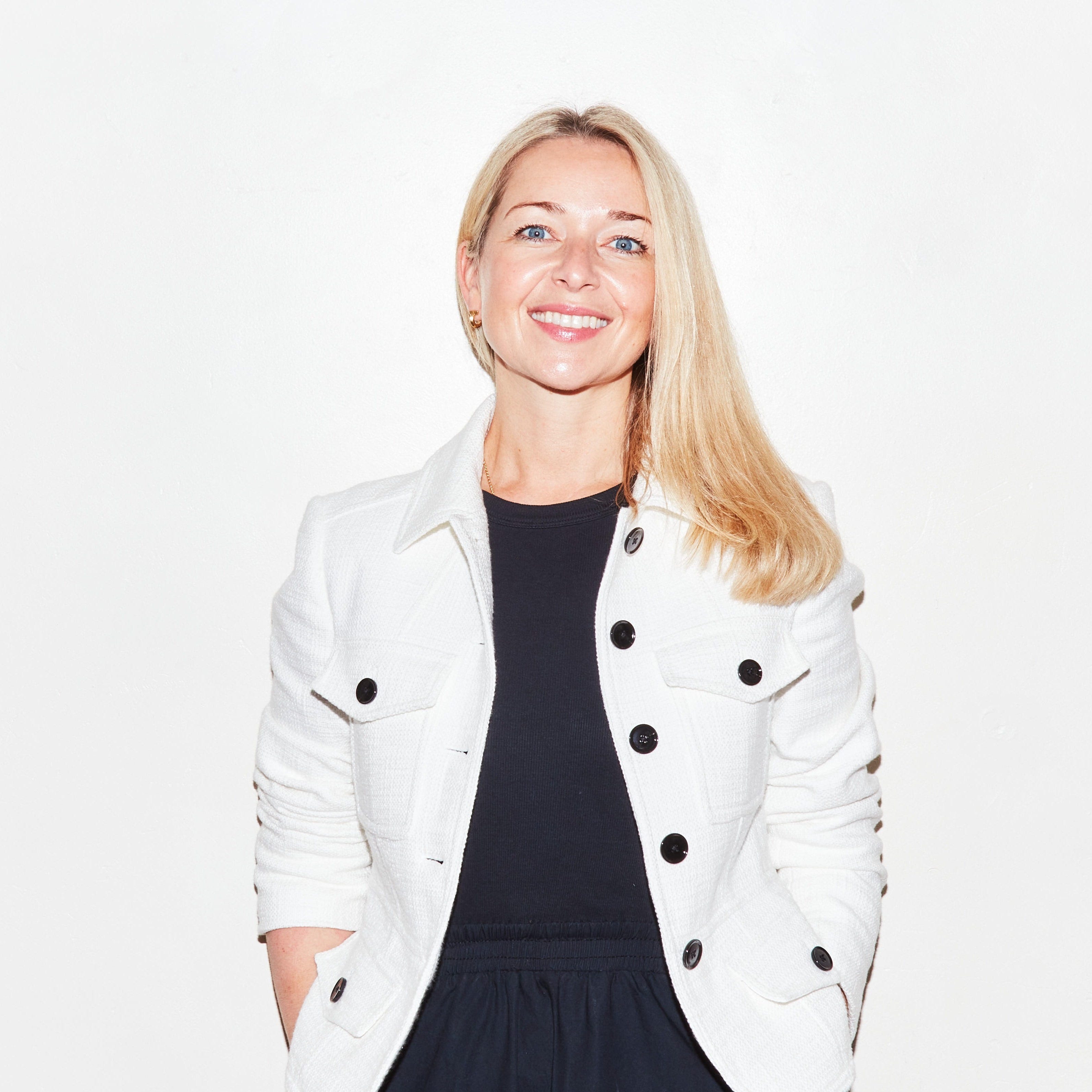
That question became the focus of my conversation with Kelly McCabe, CEO and co-founder of Perci Health, the UK’s largest virtual cancer clinic. Prior to founding Perci, she worked as an oncology dietitian and later served as Chief Operating Officer of one of the UK’s largest private cancer hospital networks.
In our conversation, we discuss why universal healthcare does not automatically translate into effective survivorship care, why so many survivors quietly accept treatable symptoms as their “new normal,” and why Kelly believes oncology must move beyond helping people survive cancer toward helping them fully recover from it.
Interview with Kelly McCabe
Can you tell people a little about yourself and what specifically made you want to start Perci Health?
I trained as a cancer dietitian and spent many years working as a Macmillan professional, caring for people with cancer as part of multidisciplinary teams. Some of the most formative years were with head and neck cancer patients, where I got a real window into what excellent, coordinated care could look like during active treatment. The teams were extraordinary. The structure was there.
But there was always this moment where treatment would end, and everything would just... stop. Patients would describe it as a kind of abandonment. The intensity of support that had surrounded them for months would disappear almost overnight, even as they were dealing with fatigue, pain, difficulty eating, anxiety, loss of mobility, sexual dysfunction. Real, persistent, often preventable consequences that could go on for years.
What frustrated me most wasn’t the absence of evidence, it was the absence of ambition. The system kept asking people to cope. ‘This is your new normal,’ patients were told. Adapt. Manage. Be grateful you survived. I remember sitting with someone who’d been through intensive chemoradiation and was struggling enormously, and thinking: we have interventions for this. Why are we asking them to tolerate it?
There was also an unspoken social contract around gratitude, an expectation that surviving should be enough. But surviving and recovering are not the same thing. I kept seeing that gap, and eventually I couldn’t unsee it.
The other thing I noticed was that cancer itself was changing. People were living for years, sometimes decades, during and after treatment. Cancer was starting to behave more like a long-term condition. But our care systems were still organised around episodes; treatment, then discharge, then periodic follow-up. The mismatch between that structure and what patients actually needed felt increasingly impossible to ignore. That’s ultimately what became Perci.
How is care actually delivered at Perci Health, and what makes it different from what patients typically experience?
We built Perci around a simple observation: cancer doesn’t affect one organ, or one moment in time. It affects the whole person, across years. So often we heard from our members that they felt “their cancer was being treated, but not them as a person.”
We call our approach Performance Oncology. The term borrows from performance medicine, the idea of preparing people to tolerate challenges, recover faster, and maintain function, but we apply it to cancer care. It’s a whole-person, connected, data-driven way of supporting people through and beyond treatment.
In practice, that means every member has a dedicated cancer nurse who does a thorough holistic assessment and helps coordinate support across psychology, dietetics, physiotherapy, exercise medicine and other specialisms. The care is truly multidisciplinary, but crucially, the patient isn’t the one doing the coordinating, which is what happens far too often in traditional healthcare.
What I think makes us genuinely different is how we think about time. Cancer isn’t a single event anymore. For many people it’s a long-term condition, with needs that wax and wane over years. Someone might need intensive support during treatment, then very little for several months, then develop late effects or psychological distress much later. Traditional pathways assume a kind of linear progression that doesn’t reflect reality.
We use technology and remote monitoring to continuously understand how someone is doing, so we can respond when needs change rather than waiting for a crisis. The question we’re always trying to answer isn’t ‘where should this person be on the pathway?’, it’s ‘what does this person need right now?’. We are a million miles away from one-size-fits all solutions or time-bound rehab programmes.
When patients arrive at Perci, what do they think they need, and what do they actually end up needing?
This is one of the most important things we’ve learned, and honestly it came from getting it wrong early on.
We originally launched almost as a marketplace, assuming patients would know what kind of support they needed. We thought people would arrive saying ‘I need a psychologist’ or ‘I need a dietitian.’ What we quickly discovered is that people know what they’re experiencing, e.g. fatigue, difficulty eating, anxiety, pain, but they don’t necessarily know what will help.
Someone presenting with exhaustion might actually be dealing with sleep disruption, deconditioning, nutritional deficiency and anxiety all at once. Someone seeking emotional support might be living with significant physical limitations that are driving their distress. You pull on one thread and you find several others.
The other thing that struck me was how many people arrived having already accepted that their symptoms were permanent. They’d been told, sometimes explicitly, sometimes just through the absence of anyone offering to help, that this was just what life after cancer looked like. The bar had been set so low that they’d stopped asking whether things could be better.
That’s why we moved toward structured care pathways with defined outcomes rather than a menu of services. Survivorship isn’t about giving people options, it’s about helping them navigate complexity and actively restoring health wherever we can.
What has had the biggest impact on patients’ quality of life and recovery?
Mental health is often the foundation (and more than 70% of our multidisciplinary appointments are with psycho-oncology teams) but I think that framing can actually obscure what’s happening, because it treats emotional and physical wellbeing as separate things when they’re deeply intertwined.
It’s very hard to feel psychologically well when you’re living with persistent pain, fatigue, or side effects that change how you function every single day. And conversely, unaddressed anxiety and distress will amplify physical symptoms. You can’t successfully treat one in isolation.
The biggest improvements we see come from a genuine biopsychosocial approach, taking seriously the physical, emotional and practical dimensions of someone’s life, and recognising how they influence each other.
I think the shift from ‘helping people cope’ to ‘optimising recovery’ is more than a semantic one. It changes what you look for, what you offer, and what you believe is possible. We should be asking: can we prevent this? Can we treat it? Can we restore function? Not just: how do we help people live with it?
One area that I think is profoundly undervalued is vocational rehabilitation — supporting people to stay in work during treatment, or return to work afterwards. The financial impact of losing your income is obvious, but the psychological consequences are just as significant and much less talked about.
Work gives people structure, identity, a sense of purpose. When cancer strips that away, it strips away something fundamental about how people see themselves. We’ve seen time and again that helping someone get back to meaningful work, even part-time, even in a modified capacity, has a ripple effect through their whole quality of life that goes far beyond the financial. It deserves to be treated as a clinical outcome, not an administrative one.
People often assume universal health coverage in the UK solves survivorship. Where does that assumption fall short, and what lessons translate to the US?
This is a really common misconception, and I understand why it exists. But universal access to treatment doesn’t automatically mean universal access to recovery.
In practice, most patients in the UK are discharged back to their GP after treatment. GPs are remarkable generalists, but it’s genuinely not realistic to expect any individual clinician to hold deep expertise across every cancer type, treatment regimen and late effect. The complexity is just too vast.
Access is also fragmented. Patients often find themselves trying to navigate between oncology, primary care, and whichever specialist might be relevant, without any coordinating infrastructure. Macmillan and other charities have filled enormous gaps here, which speaks well of those organisations, but it also means we’ve effectively delegated a core healthcare responsibility to the voluntary sector.
I think the deeper issue is structural. Our healthcare systems, in the UK and elsewhere, were designed around acute illness. You get sick, you’re treated, you recover, you’re discharged. Cancer increasingly doesn’t follow that model. People live with and beyond it for years, with evolving needs that don’t fit neatly into a fixed pathway.
The lesson for any healthcare system is the same: coverage of cancer treatment is not coverage of survivorship. They require different infrastructure, different thinking, and frankly a different philosophy about what healthcare is for.
What has surprised you most since starting Perci and what has been harder than you expected?
The thing that genuinely surprised me is how universal the agreement is that this matters. I’ve never met anyone, clinician, payer, health system leader, who didn’t immediately understand why survivorship care is important. No one argues with the need.
What’s been harder is the gap between that shared understanding and how care actually gets funded. Reimbursement structures still largely reward intervention over prevention, and activity over outcomes. There’s very good evidence that survivorship interventions improve quality of life and function, but the datasets that capture downstream savings, e.g. through reduced emergency presentations, avoided long-term complications, better return-to-work, take longer to build. The economic case is coming together, but healthcare payment systems are impatient.
There’s a real irony there. We often end up paying for the consequences of poor survivorship care anyway, just later, in a more expensive form, and usually without connecting the dots back to what wasn’t done years earlier.
I still worry about this. The need is so obvious, the agreement is so broad, and yet the structural levers haven’t caught up. That’s probably the most frustrating part of the work.
What has made this model financially viable, and can survivorship care fit into traditional payment structures long term?
We’ve built viability primarily through partnerships with private health and protection insurers. The reason those partnerships work is that we can demonstrate outcomes that create financial value relatively quickly such as improving return-to-work, reducing claim complexity, helping people recover function faster.
Cancer isn’t a single claims event for insurers. It has long, rippling consequences, for the individual, their employer, and the health system. When you invest in recovery early, those consequences become less severe and less costly. The value becomes visible.
The longer-term question about traditional payment structures is one I think about a lot. I genuinely hope they evolve, because right now, access to quality survivorship care is too dependent on where someone happens to seek care, or who they happen to be insured by. That’s not equitable.
I think the models are coming. We’re starting to see payers and health systems connect the dots between early investment in recovery and downstream cost reduction. But we’re not there yet at scale.
If you could redesign survivorship care from scratch, what would you prioritize first?
The first thing I’d do is stop treating survivorship as something that starts when treatment ends. That framing is one of the most deeply embedded problems in oncology. Survivorship should begin on day one, woven into the cancer treatment pathway from the outset, not bolted on afterwards.
I’d also rebuild care around the reality that cancer is increasingly a long-term condition. People don’t move through recovery in a straight line. They improve, plateau, struggle, recover again. A rigid pathway that assumes otherwise will always fail a significant proportion of people. We need adaptive models, supported by technology and remote monitoring, that can flex according to what someone needs at each point in their journey.
But honestly, the change I’d most want to make is a philosophical one. I’d reorient the entire system away from helping people cope, and towards optimising recovery. The first question should never be ‘how do we help people live with this?’ It should be: can we prevent this? Can we treat it? Can we restore what was lost?
Patients should never feel pressured to quietly accept a diminished quality of life simply because they’re supposed to be grateful for surviving. That expectation is doing real harm, and it’s baked into how we talk about cancer, in clinics, in the media, in the stories we tell.
Survivorship is not the period after cancer. For many people, it becomes the longest phase of the cancer journey. We should be designing systems worthy of that.
A note for Jennifer’s readers
Jennifer’s Dividends Health newsletter frames survivorship as one of the next great challenges in modern medicine — and asks why the knowledge-to-implementation gap remains so stubborn. At Perci, we live inside that gap every day. The science on survivorship interventions is strong. The need is unambiguous. The barrier is structural: reimbursement models, care pathway design, and a persistent cultural assumption that survival is itself the destination. We’d love to be part of the conversation Jennifer is building — connecting clinicians, researchers and health system innovators who believe the standard of care for cancer survivors can and must be higher.
Jen’s Reflections
One of the things I appreciated most about Kelly’s perspective is that she challenged a common assumption: that if we could just fix access to care, survivorship would take care of itself. Yet many of the same challenges we see in the United States exist in the UK, despite universal healthcare coverage.
I was also struck by Kelly’s observation that survivors often know exactly what symptoms they’re experiencing, but don’t necessarily know what can be done about them. Over time, many of these side effects become accepted as the “new normal.” The absence of support gets interpreted and reinforced as evidence that nothing can be done.
But, what resonated with me most was Kelly’s shift from helping people cope toward optimizing recovery. That mindset - preserving function, rebuilding resilience, and restoring capacity - is something I’ve explored previously in the context of aging and longevity. We don’t measure success by whether someone simply survives into older age. We care about whether they remain strong, independent, cognitively engaged, and able to participate in the activities that matter to them.
Cancer survivorship shouldn’t be any different.
The goal isn’t simply to help people live with the consequences of cancer and its treatment. The goal should be to help people recover as much health, function, and quality of life and maintain that for as long as possible. Recovery deserves to be an outcome we measure, support, and expect.
To learn more about Kelly and Perci Health, you can follow her on LinkedIn or visit https://percihealth.com.
Kelly McCabe is the CEO and co-founder of Perci Health, the UK’s largest virtual cancer clinic combining early detection and comprehensive cancer management before, during, and after a diagnosis. Previously a registered oncology dietitian with NHS experience and former COO of the UK’s largest private network of cancer hospitals, Kelly has a deep understanding of the challenges faced by cancer patients and their care teams. She is committed to redefining cancer care by bridging critical healthcare gaps and empowering patients to live well beyond diagnosis.
Your conversation with Kelly so resonated for me. The sense of abandonment, the lack of direction on how and where to navigate for ongoing care after surviving esophageal cancer has been a long and tenuous journey. And i hear similar stories in cancer support groups and on message boards from survivors of various forms of cancer. It is a formidable challenge so I am energized when I learn about programs like the one Kelly started and the interviews and subjects you tackle. Because we need more conversations, more heightened focus on the lives of survivors. A passive acceptance will change nothing.
Thank you, Mike for your kind words and for sharing with your friends. I hope I can do my small part in this world to help people with cancer live better. If this helps one person, then I've done my job :-)